
Anti-Theft Sling Bag NZ: Is It Worth It for Travel?
The train doors open, the carriage fills, and somebody's elbow is pressed into your side for three stops. Your bag is behind you, the zip is out of sight, and you cannot tell whether the bump you just felt was the crowd or a hand. At home on an Auckland bus you would shrug it off. In a busy metro abroad, with your passport, cards and phone all in one place, that half second of doubt can follow you around for the rest of the day.
That doubt is the real reason people search for an anti-theft sling bag. Not because they expect to be targeted, but because they want to stop checking. The questions below follow the order most NZ buyers work through: what the bag is, what the features actually do, how it compares with a crossbody, whether it fits your things, and whether the price makes sense. The worked example throughout is a bag we stock, and every feature and number quoted for it comes straight from its product page.
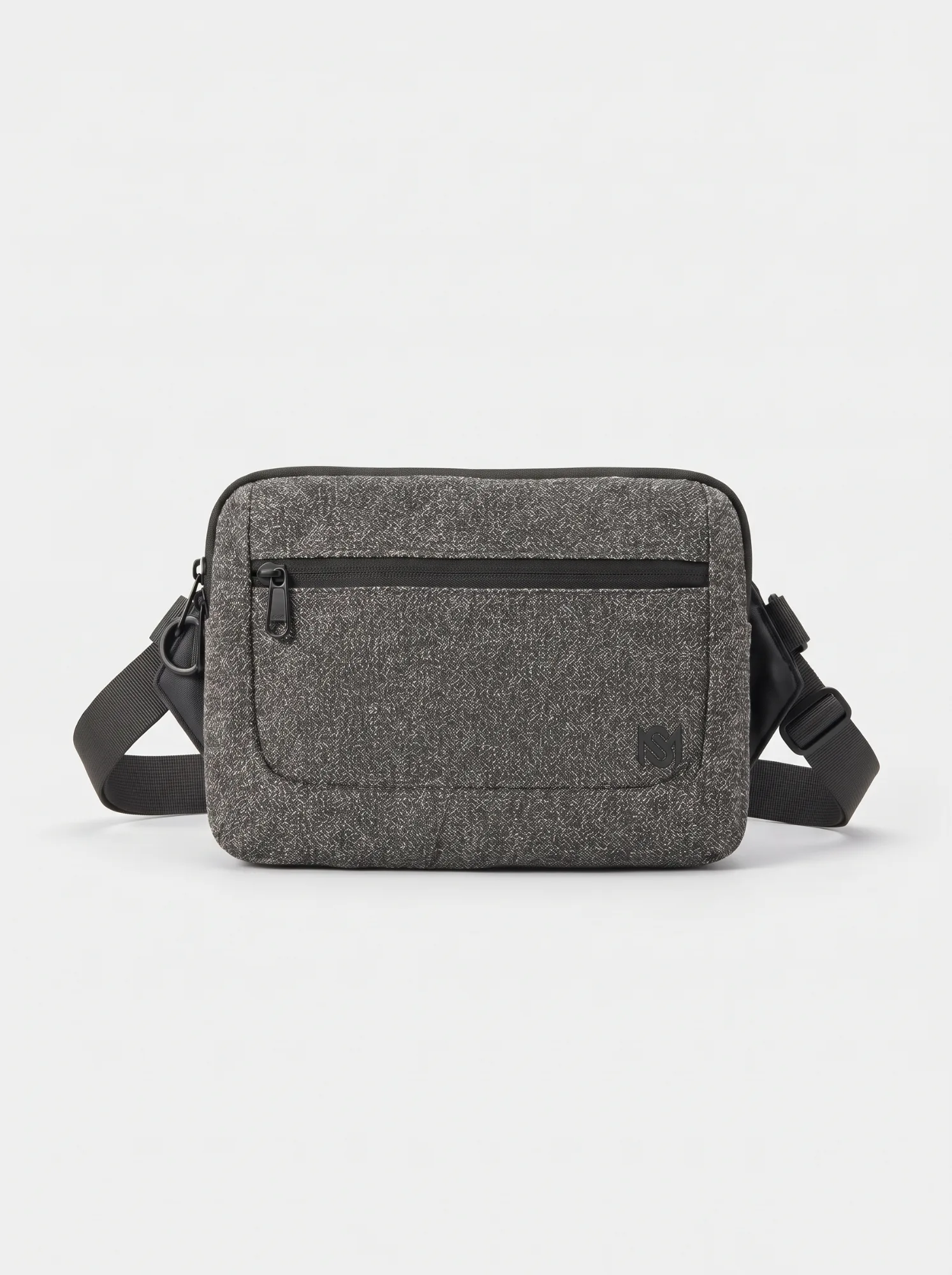
If you want to skip ahead and check the specification yourself, the Vanguard Slash-Proof Anti-Theft RFID Sling Bag page lists its material, dimensions and security features in one place, so you can judge it against your own trip before reading further.
What Is an Anti-Theft Sling Bag, and How Is It Different From a Regular Crossbody?
A sling bag is a slim, single strap bag worn diagonally across the body, usually sitting on the chest or against the back rather than hanging at the hip. It is closer to the body than most crossbody bags, and because it is flat it can be swung round to the front in one movement when you need it.
The anti-theft part is not one feature. It is a group of features that each target a specific move a thief might make: cutting the bag open, cutting the strap, opening a zip without you noticing, or reading a contactless card through the fabric. A regular crossbody bag may have none of these; an anti-theft sling bag puts several of them into one design.
The trade off is capacity. Sling bags are built around the few items you cannot afford to lose, not around a full day's load. If you are expecting the volume of a tote or a day backpack, a sling is the wrong tool. If you want your phone, cards, keys and passport held flat against you while your main bag carries everything else, it is exactly the right one.
What Does Anti-Theft Actually Mean on a Sling Bag?
It means the bag makes the common opportunistic thefts slower and more obvious. No bag can promise you will never lose anything, and you should be wary of any product that claims it can. What a well specified bag can do is remove the easy wins, because most bag theft relies on speed and on the owner not noticing.
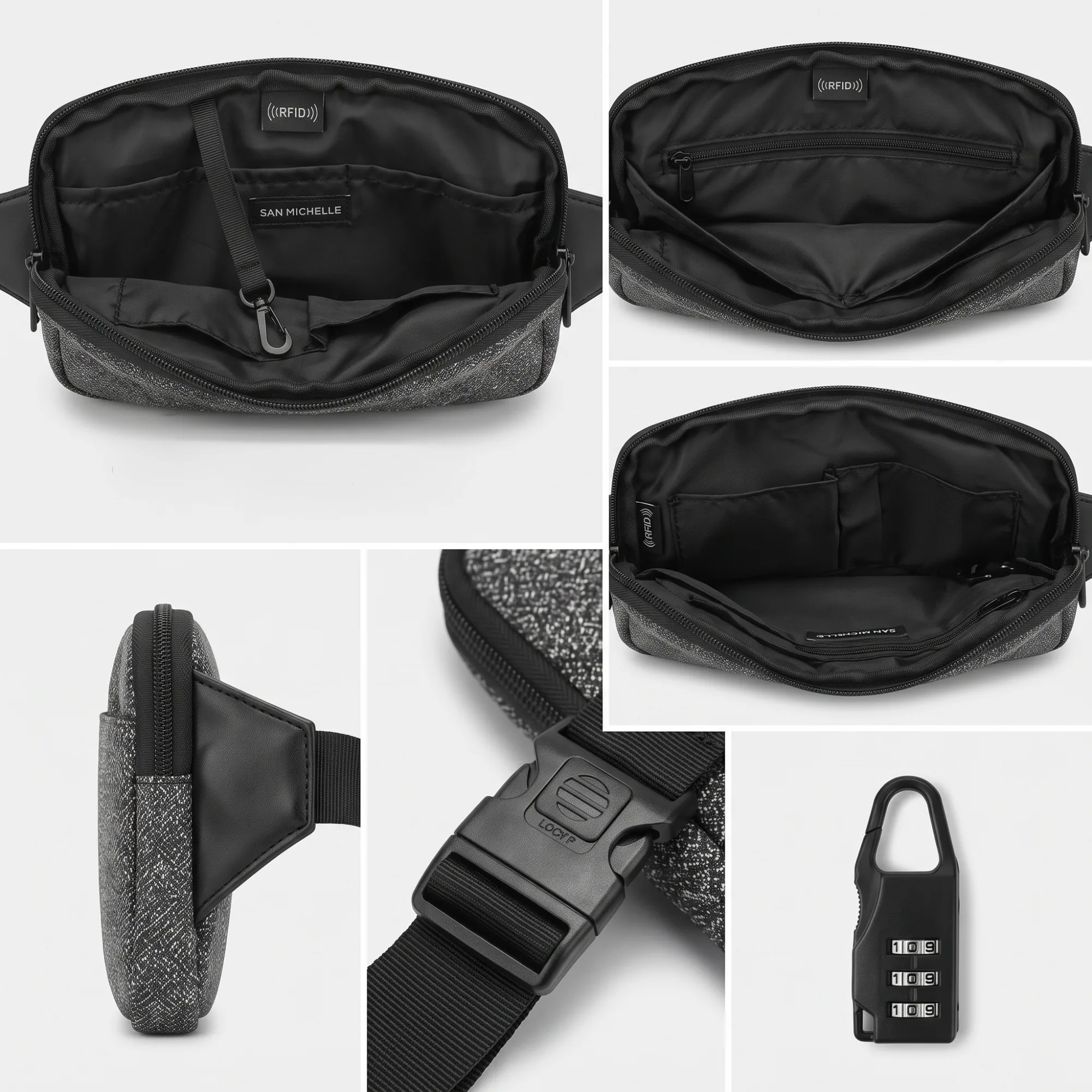
Here is how each feature listed on the Vanguard product page lines up with the problem it is meant to address:
| Feature listed on the product page | The theft move it is aimed at | What it means in practice |
|---|---|---|
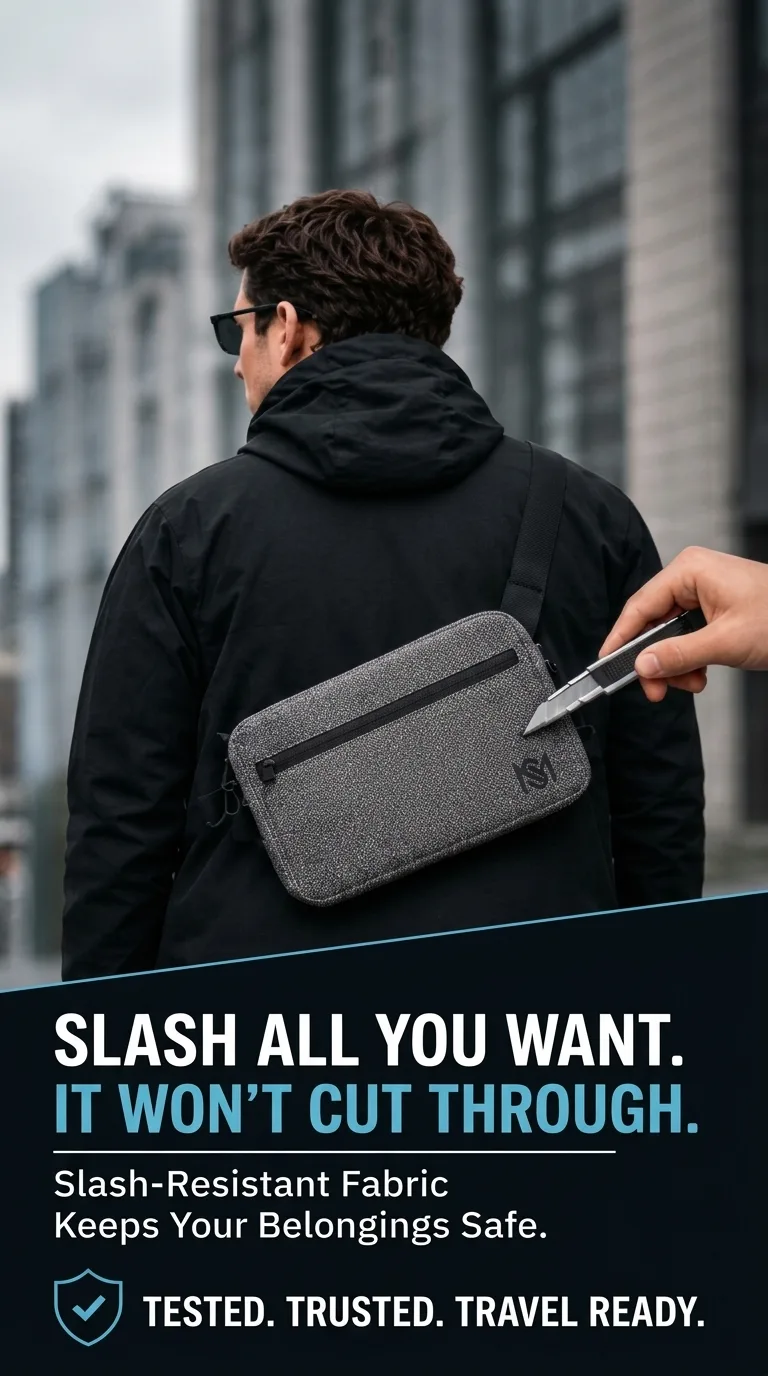
| Slash proof material | Cutting through the bag body to reach the contents | The body is made from slash proof material, which makes a quick cut harder to get through |
| Adjustable wire-reinforced strap | Cutting the strap and walking off with the whole bag | The strap is wire reinforced, which slows down a quick snip |
| Slide locking strap | Unclipping or loosening the strap in a crowd | The strap has a slide lock, which helps it stay at the length you set |
| Free lock included | Opening a zip while the bag is behind you | A lock is included, which can make the zips harder to open unnoticed |
| YKK zippers | Zips that split or fail under strain | The bag uses YKK zippers |
| RFID blocking | Reading contactless cards or chips through the bag | The bag has RFID blocking; keep cards and your passport in the internal zip pocket |
| Internal key clip | Keys sitting loose and getting dropped or lifted | An internal key clip gives your keys a fixed place inside the bag |
Read the table as layers rather than guarantees. The material and strap deal with the snatch and slash scenario. The lock and zips deal with the quiet dip into an unattended zip. RFID blocking deals with a much rarer, more technical risk, which is worth its own question below.
Does RFID Blocking Matter for NZ Contactless Cards and Passports?
It matters less than marketing often suggests, but it is not useless. Most New Zealand bank cards now support contactless payment, and NZ passports carry an electronic chip. Both can be read by a compatible device at very short range. An RFID blocking layer in the bag is designed to stop that signal getting through the fabric while the cards are inside.
Physical theft is a far more common problem for travellers than wireless skimming. A pickpocket who takes your whole wallet gets far more than someone trying to read a card through a bag. So RFID blocking should be a tie breaker between two otherwise similar bags, not the main reason to buy one.
Where it earns its place is convenience. The Vanguard product page lists RFID blocking among the bag's features, and the simplest way to use it is to keep your cards and passport in the internal zip pocket rather than an outer pocket. That is one less thing to remember on the morning of a flight.
Sling Bag or Crossbody Bag: Which Suits Your Day in NZ?
The answer depends on how much you carry and how crowded your day is. A crossbody bag usually hangs at the hip, has more depth, and holds a wallet, sunglasses, a small umbrella and a water bottle without complaint. A sling bag sits higher and flatter, holds less, and is easier to keep under your hand.
For a normal Wellington workday or a weekend wander round Ponsonby, a crossbody bag is usually the more practical choice because you carry more and the risk is low. We go through those styles in detail in our shoulder bag vs crossbody bag guide, including which straps and sizes suit everyday NZ life.
A sling bag starts to win in three situations. The first is international travel through busy stations, markets and tourist sites, where you want your passport and cards on your body rather than in a backpack. The second is any day where you are already carrying a larger bag, such as a backpack on a commute or a carry on through an airport, and you want your valuables separated from it. The third is events and crowds closer to home: concerts, festivals or a packed ferry, where a small, locked bag on your chest is simpler than keeping watch over a larger one.
Many people end up owning both. The crossbody does the daily work; the sling comes out when the setting is busier or the stakes are higher.
What Fits Inside a 25 x 16.5 x 2.5 cm Sling Bag?
The Vanguard measures 25 cm x 16.5 cm x 2.5 cm according to its product page, and it has one main compartment with an internal zip pocket, a multifunctional pocket and external zip pockets. That shape tells you most of what you need to know. It is wide and tall enough for flat items, and only 2.5 cm deep, so it is a bag for essentials rather than bulk.
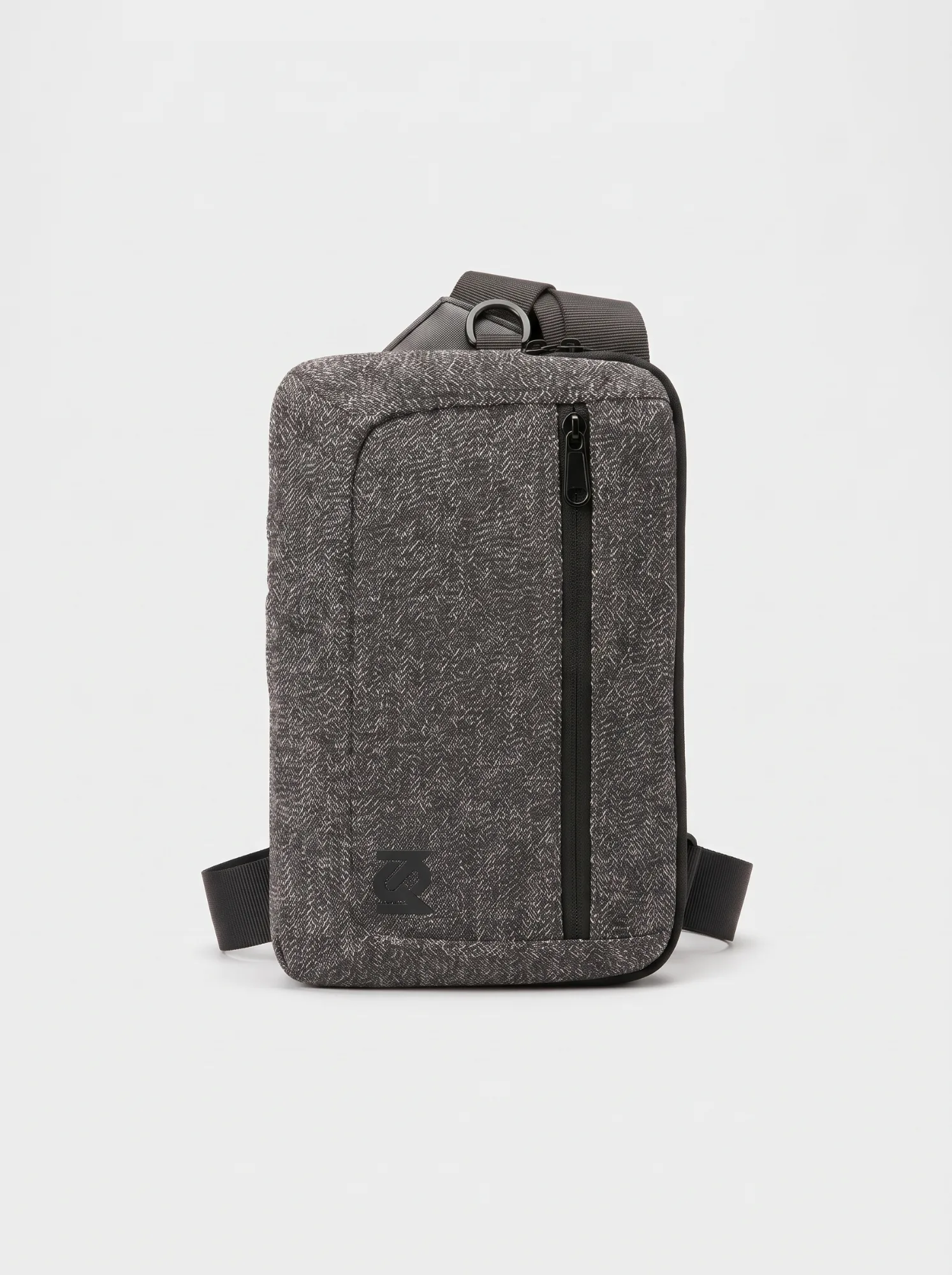
Measured against those dimensions, a typical travel and commute load looks like this:
- A smartphone, including most larger models, laid flat
- A standard NZ passport, which is smaller than the bag's height and width
- Bank cards, a driver licence and a transit card in the internal pockets
- House or car keys on the internal key clip
- A boarding pass, a few folded notes and a lip balm or earbuds case
What it will not hold comfortably is anything thick: a full size wallet stuffed with receipts, a sunglasses case, a water bottle or a compact umbrella. If those things come with you, they belong in your main bag. Many buyers find this is the point of a sling. It forces a clear split between valuables, which stay on your body, and everything else, which can live in a bag you are less worried about.
A quick check before you buy: lay out what you actually carry on a travel day. If it sits flat in a rectangle roughly the size of a large paperback, the sling will suit you. If you need to stack things to fit, look at a deeper crossbody instead.
Is It Worth NZ$149 Compared With Other Ways to Carry Valuables?
On 12 November 2026 the Vanguard product page lists the bag at NZ$149.00, with the option of four interest-free payments of NZ$37.25. Prices may change from time to time, so check the product page for the current figure before you order.
Whether that is worth it depends on what you are comparing it to. A money belt worn under clothing is cheaper and very discreet, but it is awkward to reach every time you need your phone or a card, which is often on a travel day. A small backpack holds far more, but it sits behind you, which is exactly where opportunistic theft happens. A standard crossbody is a better everyday bag but usually lacks cut resistant material, a lockable zip and RFID blocking together.
The value of an anti-theft sling is that it combines several protections into one bag you will actually wear. If you travel overseas once a year or more, take crowded public transport, or regularly carry a passport and several cards at once, the cost spread over a few years of use is modest next to the cost and stress of replacing a passport abroad. If you mostly drive, rarely travel and carry very little, a simpler crossbody is likely the better spend.
How Do You Wear an Anti-Theft Sling Bag So the Features Actually Work?
Security features only help if the bag is worn the way it was designed. A sling hanging loosely on your back in a crowd is not much safer than any other bag. A few habits make a real difference:
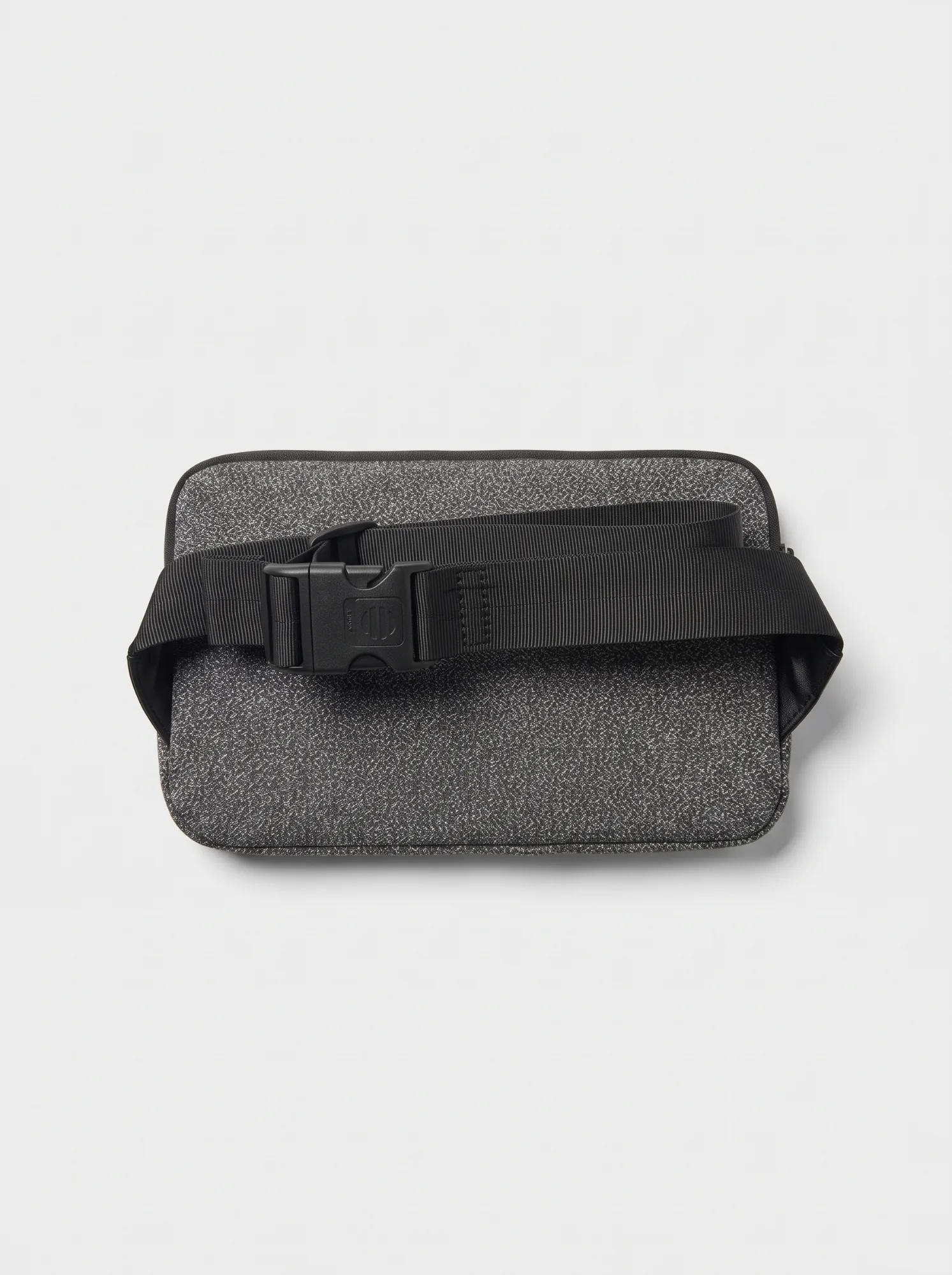
- Adjust the strap so the bag sits snug against your chest or side, then use the slide lock to hold that length
- Use the included lock on the main zip whenever you are in transit, at markets or in queues
- Keep your passport and cards in the internal zip pocket rather than the external pockets
- Clip your keys to the internal key clip so they are never the first thing in your hand when you open the bag
- In crowds, swing the bag to the front and rest a hand on it, rather than leaving it at your back
Before an overseas trip it is also worth reading the destination advice on SafeTravel, the New Zealand government's official travel advisory site. It flags local safety issues by country, which helps you decide when the sling should be locked and worn at the front for the whole day and when a lighter touch is fine.
How Quickly Can You Get One Before Your Next Trip?
If you are leaving soon, timing matters as much as the bag itself. According to the product page, once an order is dispatched, North Island deliveries take 1 to 2 business days and South Island deliveries take 2 to 5 business days, provided the courier has no current delays.
If you are in Auckland and need it sooner, you can ring any of our stores with the product name or its SKU, 10018, and the team will confirm whether it is in stock; payment is then made in store when you pick it up. With nine stores across Auckland, that is often the fastest route the week before a flight. Seeing it in person also lets you check the strap length and how flat it sits on your own frame.
If you want to compare the Vanguard against other bags built for the airport and beyond, our travel bags collection puts the sling alongside the rest of our travel range, so you can plan your valuables bag and your main bag together.
What Else Do People Ask About Anti-Theft Sling Bags?
Can a slash-proof bag still be stolen?
Yes. Slash proof material and a reinforced strap make cutting much harder and slower, but no bag removes the risk entirely. The features work best combined with good habits, such as keeping the bag at the front and locked in crowds.
Is a sling bag allowed as a personal item on flights?
A flat sling of this size is small enough that most travellers wear it on board alongside their carry on. Airline personal item rules vary, so check your airline's allowance before you fly, especially on budget carriers.
Do I still need an RFID wallet if my bag has RFID blocking?
The Vanguard product page lists RFID blocking as a feature of the bag, without detailing which pockets it covers. To get the most from it, keep your cards and passport in the internal zip pocket. A separate RFID wallet is still useful for any cards you carry outside the sling.
Is an anti-theft sling bag worth it just for commuting in NZ?
For most NZ commutes the risk is low, so a regular crossbody is usually enough. A sling makes more sense if your commute involves crowded trains or buses and you also travel overseas, because one bag then covers both.