
Purses NZ: How to Choose a Purse That Fits Your Bag and Lasts for Years

Most purses are not worn out when people replace them. They are abandoned. The stitching is fine, the zip still runs, the leather has barely softened, and yet the purse sits in a drawer because it never fitted the life it was bought for.
To show how that happens, take an example. Picture a shopper we will call Hannah. She is not a real customer; she is a composite of a very common situation. She works in Wellington, walks to the office along the waterfront, and for years has carried a large leather tote with room for everything. When she finally treats herself to a good purse, she chooses the style she has always admired: a long, elegant wallet with a slot for every card, a full length note compartment and a zipped coin section, in a soft tan leather that feels expensive the moment she holds it.
For a while it is perfect. Then her life changes shape. A new role means meetings across town, and the heavy tote gives way to a small crossbody bag that keeps her hands free on windy mornings. The long wallet will not fit. She tries carrying it separately and nearly leaves it in a cafe. She tries leaving it at home and tucking cards into her phone case, and loses a bank card in a taxi. Within a season the tan wallet is back in the drawer, still beautiful and still unused, and she is looking at purses again.
Now imagine that, this time, someone asks her the question nobody asked the first time. Not what colour she likes, not what she wants to spend, but which bag the purse will live in and how she actually pays for things on an ordinary Tuesday.
That question is the whole of this guide. A purse is not chosen on its own. It is chosen for a bag, a payment habit and a routine, and when any of those is wrong the purse fails, no matter how well it is made.
If you would rather test a purse inside your own bag before you commit, bring the bag with you to any of our nine San Michelle stores and see how each style actually sits in it. Ten minutes at a counter saves a year of carrying the wrong thing.
What Actually Went Wrong With Hannah's Purse
Nothing was wrong with the purse itself. The mistake was the order of the decision. Hannah picked the purse first and assumed every bag she owned would make room for it. In practice it works the other way around: the bag sets the limits and the purse has to live inside them.
There are three separate mismatches hiding in this example, and they are the same three that sit behind a great many purse regrets.
The first was size against the bag. A long wallet is built to lie flat against the inside wall of a tote or a structured shoulder bag. Most crossbody bags and many small shoulder bags are narrower inside than a long wallet is long. The purse either will not go in, or goes in diagonally and forces the zip open. The fix is simple and almost nobody does it: measure the inside base of the smallest bag you use regularly, then check the purse dimensions on the product page before you fall for a colour.
The second was the payment habit. Hannah had bought a purse designed for someone who carries notes, coins, receipts and a full deck of loyalty cards. Her real week looked different. She tapped her card or her phone for almost everything, used cash only at the Saturday market, and kept receipts on her email. She was paying, in bulk and weight, for compartments she never opened.
The third was the routine. Hannah switched bags depending on the day, and a purse that only fits one of those bags turns every switch into a small problem. People who move between a work tote, a weekend crossbody and an evening clutch need a purse that fits the smallest of them, or a deliberate plan for two purses that share the load.
Choose the purse for the smallest bag you carry often, not the biggest bag you own.
Seen this way, the second shopping trip becomes much shorter. Hannah is no longer choosing between dozens of attractive purses. She is choosing between the two or three that will actually fit her crossbody and still hold what she uses.
Five Purse Types and the Days Each One Suits
Purse names are used loosely across New Zealand retailers, which makes browsing harder than it needs to be. It helps to think of purse types by the kind of day they are built for rather than the label on the tag. Here is how the main styles behave in real use, following the same questions our example shopper would ask at the counter. On our site, the first three sit in the wallets range and the slim styles in the card holders range, so you can compare them side by side once you know which type you need.
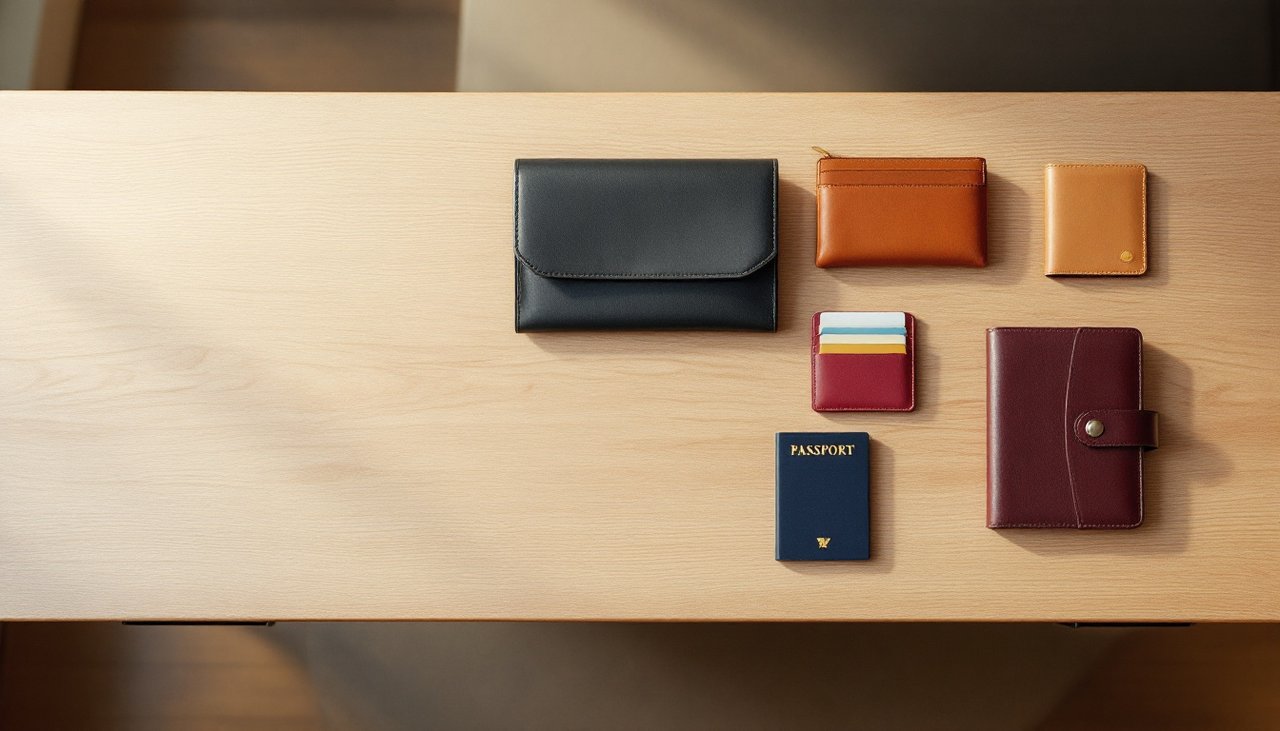
The long wallet suits the person who carries a tote or a roomy shoulder bag most days. It keeps notes flat, holds a lot of cards in view, and often has a zipped coin section and a phone pocket. It is the best purse for someone who still uses cash regularly, keeps paper receipts for work expenses, or likes everything in one place. It is the wrong purse for anyone whose everyday bag is small, because it will dictate which bags you can use.
The medium wallet is the compromise that works for most people. It usually folds once, so it is roughly half the length of a long wallet, yet it still has space for a handful of cards, some notes and coins. It fits the majority of shoulder bags and larger crossbodies. If you switch between a work bag and a weekend bag and only want to own one purse, this is the size to start from.
The small wallet is where Hannah ends up. Bifold and trifold styles in this size hold the cards you actually use, a folded note or two and a little coin space. It slips into a compact crossbody, a belt bag or an evening bag without distorting the shape. The trade off is capacity; you have to edit what you carry, which many people find is a benefit rather than a cost.
The coin purse and cardholder is for the person who pays with a phone or a single card and wants almost nothing else. A slim cardholder can live in a jacket pocket or a phone sleeve, and a small coin purse handles the market stall or parking meter. Many people pair this with a larger purse kept at home for documents and less used cards.
The travel wallet or passport holder solves a different problem. At an airport you need your passport, boarding pass, a second currency and a card or two within reach, and fumbling through a daily purse at a gate is where things get lost. Keeping travel items in their own wallet means your everyday purse stays unchanged and the travel kit is ready the next time you fly.
If you are unsure which camp you fall into, a quick way to sort yourself is to look at what you carried last week:
- Mostly tapping a phone or single card, with a small bag: cardholder or small wallet
- Some cash and a few cards, moving between two or three bags: medium wallet
- Regular cash, receipts and a tote most days: long wallet
Bag style matters as much as habit here. If your everyday bag is a crossbody, our crossbody bag guide walks through the sizes and shapes that suit different routines, which in turn tells you how much purse you have room for.
The Test Hannah Runs Before Buying Again
The second time around, the useful move is one that sounds obvious and yet rarely happens in a shop. In our example, Hannah empties her real everyday contents onto the counter and tests each purse against them, rather than imagining how she might use it.
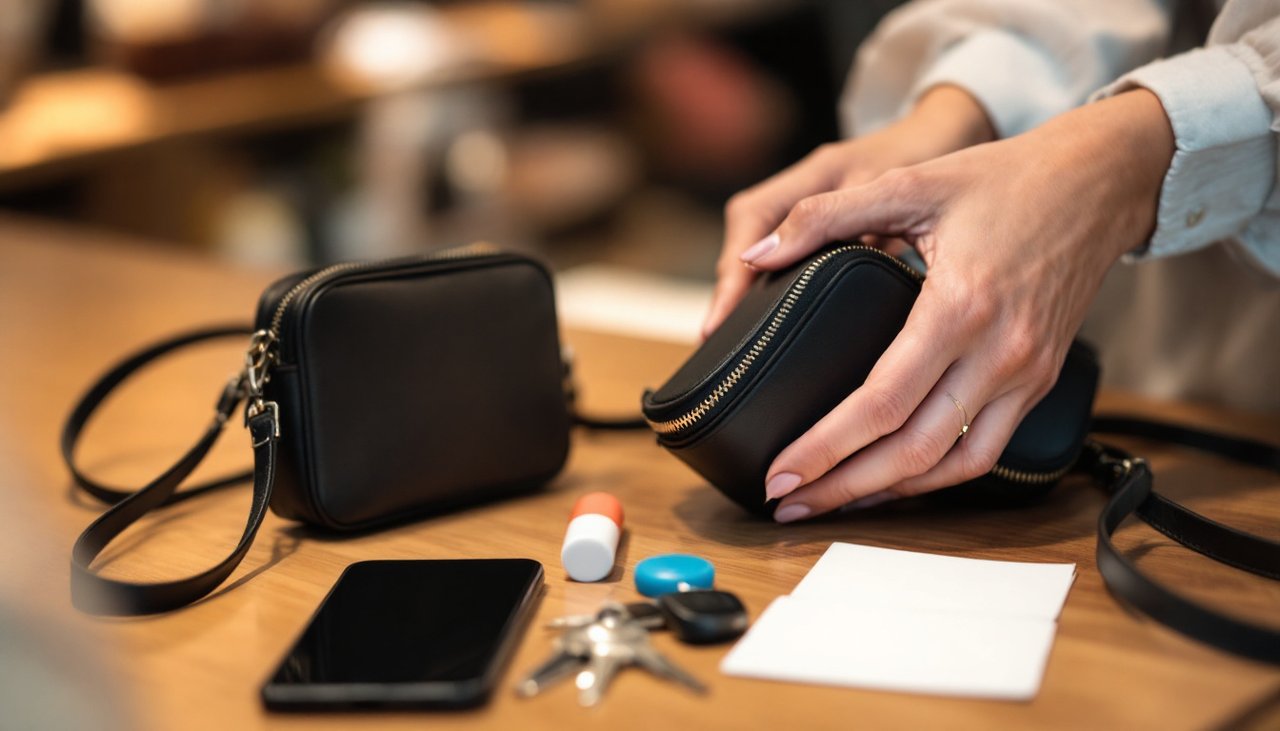
Start, as she does, by counting the cards actually used in the past week, not the ones owned. The difference is usually striking. In Hannah's case that means a driver licence, a bank card, a credit card, a library card and a coffee loyalty card, with the rest untouched for months. Those cards go into a drawer at home, and her purse no longer needs a dozen slots.
Next, look at cash honestly. Hannah uses coins at the weekend market and a note occasionally, so she needs a coin section that closes securely, but not a full length note compartment.
Then comes the fit test, which is where most purchases should be decided. Put each shortlisted purse into the bag alongside a phone, keys and a lip balm, then zip the bag shut. In our example, one purse fits but makes the bag bulge. Another fits neatly but needs two hands to open. The right one goes in flat, leaves the zip running freely, and opens with one hand while the other holds a phone, the exact motion repeated at a checkout dozens of times a week.
A purse earns its place at the checkout, not on the display shelf. If it cannot be opened with one hand while you hold your phone, you will stop carrying it.
The last check is the closure. Zip around purses are secure, keep coins from escaping and suit travel and busy public transport, but they are slower at a till. Snap and flap closures are quicker but can let coins slip if the coin pocket has no zip of its own. For someone like Hannah, a small wallet with a snap closure and a separately zipped coin pocket gives speed and security in the same purse.
This whole test takes about ten minutes. It is worth doing even if you shop online: empty your bag at home, measure the space, list what you really carry, and compare that against the dimensions and card slot counts on the product page.
Why Lining, Leather and Closures Decide the Second Year
Fit decides whether you carry a purse in the first month. Materials and construction decide whether you still want to carry it in the second year. This is where an expert eye saves money, because two purses can look almost identical on day one and age very differently.
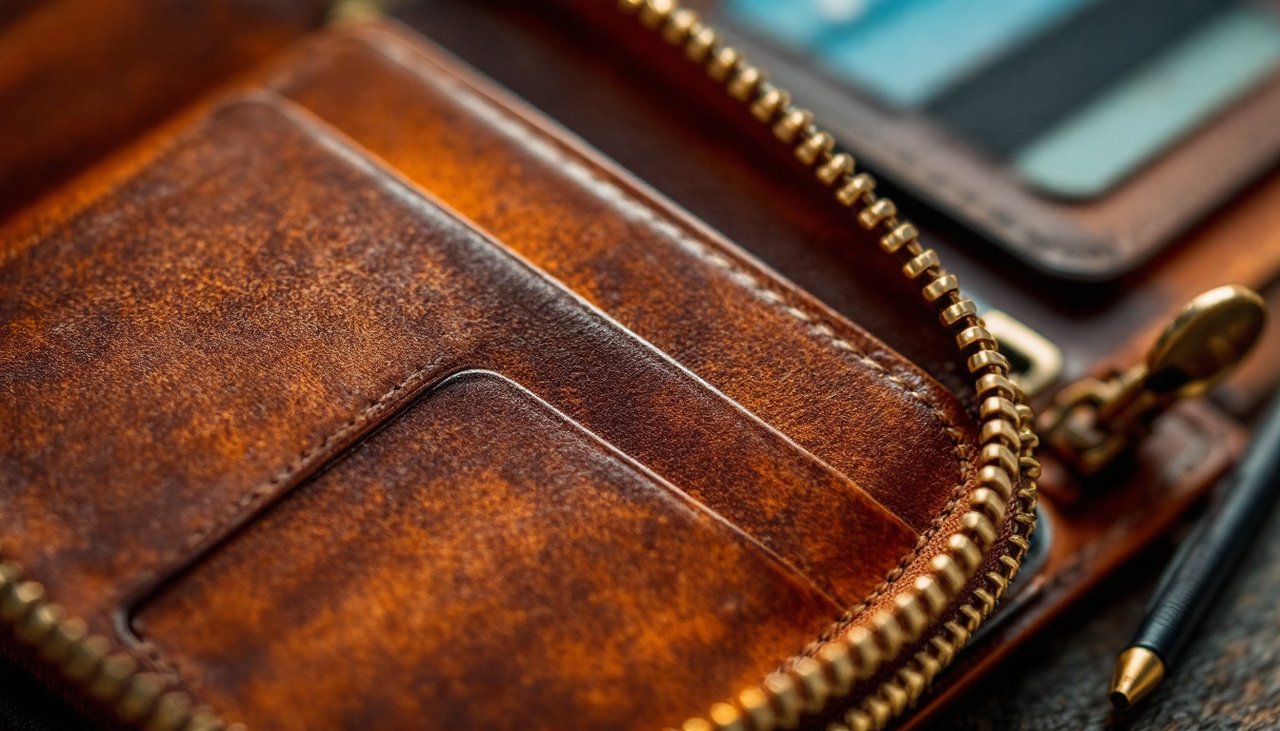
Genuine leather softens and moulds to use, and a well made leather purse often looks better with age as the surface develops a patina. Its weak points are water and pressure. A purse that lives in a bag with a leaking drink bottle, or gets soaked on a wet Auckland afternoon, can mark and stiffen. Wipe it dry, let it air out away from heaters, and condition it occasionally; the same care principles that apply to a leather handbag apply here.
Vegan and PU leather is lighter, usually cheaper, and easy to wipe clean, which suits people who are hard on their bags. The thing to watch is the edges. Over heavy use, coated materials can crack or peel where they fold, so look for purses with finished, rolled or painted edges rather than raw cut ones, and a fold line that does not look stressed when new.
Stitching and lining tell you more about quality than the outside does. Open the purse and look at the card slots: even, tight stitching and slots that hold a card without it sliding out are good signs. A fabric lining should be firmly attached rather than loose, because loose lining is where coins disappear and tears begin.
Zips and hardware take the most wear. Run the zip around its full length several times. It should move smoothly around corners without catching. Metal snaps should close with a firm click and stay closed when the purse is shaken gently.
RFID blocking is often sold as essential. The honest position is more measured. Contactless cards can in principle be read at close range, and a blocking layer is a sensible extra for travel wallets and passport holders that spend time in crowded airports and tourist areas. For an everyday purse, it is a reasonable feature to have rather than a reason on its own to choose one style over another. If you want to understand card fraud risks more broadly, Netsafe keeps up to date guidance for New Zealanders on scams and payment security.
In the example, the tan long wallet is well made on every one of these counts. Its problem was never quality. That is precisely why the order of the decision matters: fit first, then materials, then colour.
What Happens When Hannah Buys Again
Follow the example through. Hannah leaves with a small leather wallet with a snap closure and a zipped coin pocket, in a darker shade that will not show marks from the bottom of a bag. It goes into her crossbody that evening and stays there.
The more interesting part is what happens to the long wallet. There is no need to sell it or give it away. It can become a home and travel organiser, holding the cards she rarely uses, spare cash and her passport between trips, and on the days she goes back to the big tote for a full day of meetings, she carries it again. Instead of one purse doing a job it was not built for, she has two purses each doing the job they were designed for.
Months later, the measure of success is simple: the small wallet is still in daily use, the leather has softened, and there has been no reason to buy a replacement or reorganise the cards. That is the real test of a good purse: not how it looks in the shop, but whether it is still in your bag a year later without you thinking about it.
The pattern holds whether you commute through central Auckland, walk the Wellington waterfront or run errands around Christchurch. Start from the bag you carry most often, be honest about how you pay, test the fit with your real contents, then choose the material and colour you love within that shortlist. The purse you end up with may be smaller than the one you imagined, and it will be the one you actually use.
When you are ready, you can browse our purse and wallet range online at San Michelle, from long and medium wallets to small wallets, cardholders and travel wallets, and compare dimensions against your own bag before you buy. If you prefer to feel the leather and try the fit in person, bring your everyday bag into a store and our staff can help you run the same ten minute test described above.
Questions People Ask Before Buying a Purse
What is the difference between a purse and a wallet in New Zealand?
In New Zealand, purse usually means a wallet designed to hold cards, cash and coins, often with a coin section, while wallet is used for both men's and women's styles. In American usage purse often means a handbag, so it helps to check product photos when shopping on overseas sites.
What size purse fits in a crossbody bag?
Most crossbody bags suit a small wallet, a slim bifold or a cardholder. Measure the inside base of your bag and compare it with the purse length on the product page, allowing room for your phone and keys so the zip still closes easily.
Is an RFID blocking purse worth buying?
RFID blocking is a sensible extra for travel wallets and passport holders used in busy airports and tourist areas. For an everyday purse it is a useful feature to have, but fit, closure and build quality should come first when you choose.
Does a leather purse last longer than a vegan leather purse?
A well made genuine leather purse usually ages better and softens with use, provided it is kept dry and conditioned occasionally. Vegan and PU leather purses are lighter and easy to clean, and they last well when the edges are properly finished rather than left raw.