
Leather Tote Bag NZ: Care, Ageing and How to Choose
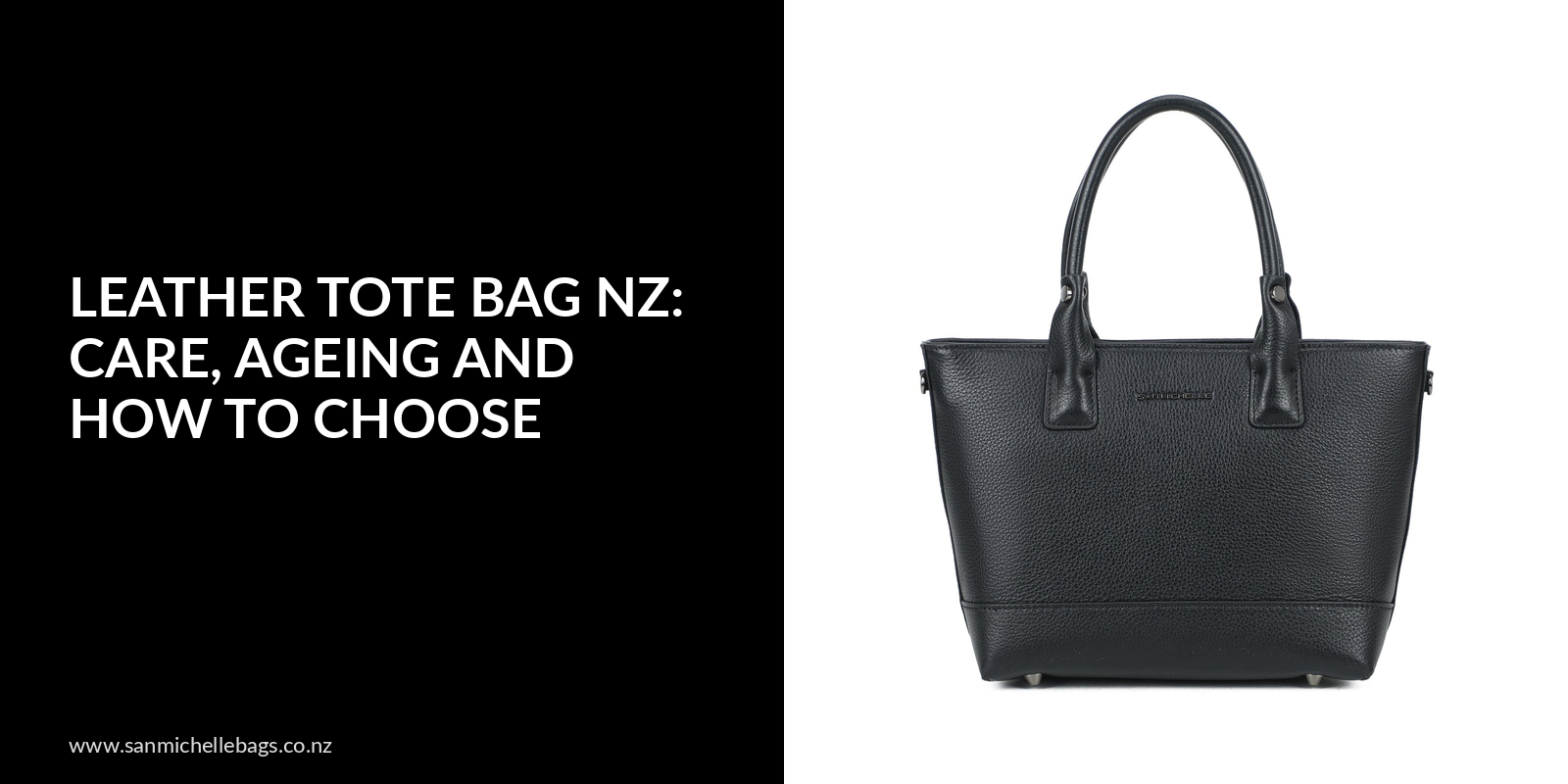
A leather tote is the bag people keep longest. It carries a laptop to work, a change of clothes to the gym and a shop on the way home, and unlike almost everything else in a wardrobe it looks better after three years than it did on day one. That last part is only true if you choose the right leather to begin with and give it about five minutes of attention a month. This guide covers both.
What actually makes a leather tote worth it
Leather is not one material. The difference between a tote that softens into something better and one that cracks in the second winter comes down to how the hide was prepared.
Full grain keeps the outermost layer of the hide, with its natural markings intact. It is the most durable option and the one that develops a patina, meaning the surface darkens and takes on a soft sheen where hands and shoulders touch it most.
Top grain has the very surface sanded back and a finish applied. It is more uniform, more resistant to marks, and slightly less characterful as it ages. For a bag that gets thrown into a car boot and carried in the rain, that trade is often the right one.
Pebbled or textured finishes are top grain with a grain pattern pressed into them. They matter for a practical reason rather than a cosmetic one: texture hides scuffs and fingerprints far better than a smooth finish, which is why a pebbled black tote still looks tidy long after a smooth one has started to show every knock.
Our leather range is built around finishes chosen to wear rather than to photograph, which is why the pebbled and lightly grained pieces dominate it.
Size it to what you actually carry
The most common mistake is buying the tote you want to grow into. Fill it with what you carry on a normal Tuesday, not what you carry when travelling.
| What you carry | What to look for |
|---|---|
| Phone, wallet, keys, sunglasses | A small structured tote. Enough to hold shape without slumping |
| The above plus a water bottle and a book | A mid-size tote, roughly the width of a folded A4 page |
| A 13 or 14 inch laptop | A tote with a flat base and a sleeve or padded section |
| A 15 inch laptop plus a change of clothes | A large tote, and check the base width rather than the height |
Two dimensions decide usability more than overall volume. Base width determines whether the bag stands up when you put it down and whether a laptop sits flat. Handle drop determines whether it clears a coat sleeve on your shoulder, and 22 to 25 cm is the range that works over a winter jacket for most people.
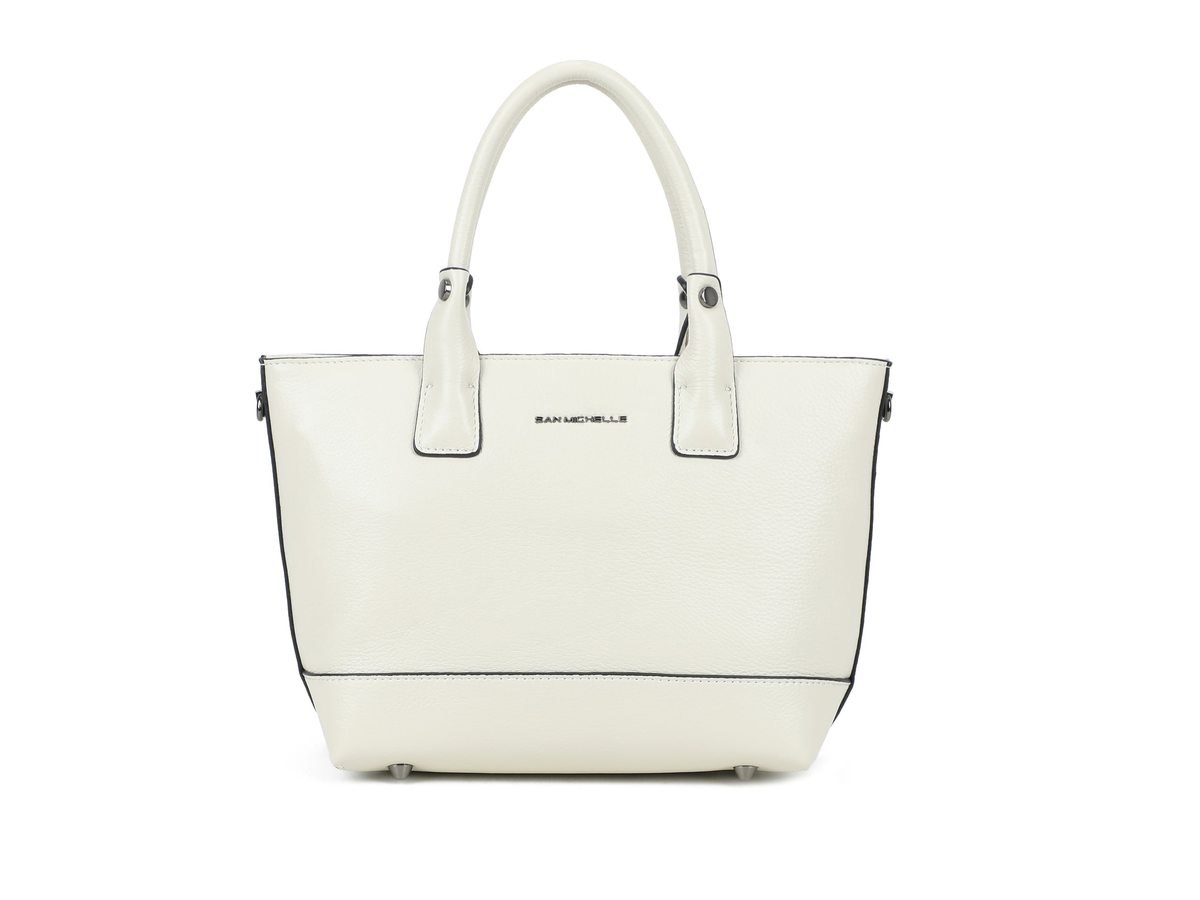
The Mara Small Leather Tote Bag sits at the structured end of the leather range at $129, measuring 30 cm wide, 20 cm high and 10 cm deep, which covers a normal day without a laptop. If you are carrying a laptop, work from the base width and the handle drop rather than the overall look, and check the current leather range for what is in stock in that size.
Structured or slouchy
This is a genuine fork rather than a style preference, because it changes how the bag behaves when it is not full.
A structured tote holds its shape empty. It looks tidy on a desk or a floor beside you, protects what is inside, and reads as more formal. The cost is that it takes up its full footprint whether it is full or not.
A slouchy tote collapses down when lightly loaded and expands when you need it. It is more forgiving on a crowded bus and more casual in appearance, and a laptop inside one needs a sleeve because the bag will not hold it flat on its own.
If the tote is mostly for work, structured. If it is mostly for everything else, slouchy. If it needs to be both, structured with a soft top edge is the compromise that works.
How leather actually ages
People expect leather to either stay new or fall apart. What it really does is change, and knowing the difference between change and damage saves a lot of unnecessary worry.
Patina is not wear. The gradual darkening at the handles and corners is oil from your hands settling into the surface. It is the leather doing what it is meant to do, and it is the reason a well used bag looks more expensive than a new one.
Softening is normal. A structured bag will relax over the first six months as the fibres break in. It will not go back, and it is not a fault.
Small scratches usually self-heal. On full grain leather, a light surface scratch will often disappear if you rub it gently with a clean finger, because the warmth redistributes the oils.
What is actually damage: cracking, which comes from leather that has dried out; dark stains that spread, which come from oil or water sitting too long; and colour transfer from dark denim onto pale leather, which is the one that is genuinely difficult to reverse.
The care routine that keeps it looking good
Leather care is simple and most people do too little of it rather than too much.
- Wipe it down weekly with a dry soft cloth. Most surface marks are dust that has not had time to settle.
- Condition every three to six months, more often in a dry climate or if the bag lives in a car. Conditioner replaces the oils that keep the fibres flexible, and it is the single thing that prevents cracking.
- Test any product on the base first, where nobody looks, before putting it on a visible panel.
- Let it dry naturally if it gets wet. Blot with a towel, stuff it loosely to hold its shape, and keep it away from heaters and direct sun, which dry leather too fast and cause cracking.
- Store it stuffed and upright in a dust bag, not a plastic one. Leather needs air, and plastic traps moisture against it.
- Keep pale leather away from raw denim, especially in the first few wears of new jeans.
Our companion guide, how to clean a leather handbag without ruining it, goes through the cleaning side in detail, including what to do about the marks that do appear.
Colour, and which ones stay looking good
Colour is where the practical and the pretty diverge most.
Black hides everything and goes with everything, and on a smooth finish it shows scuffs as pale lines. A pebbled black is the most forgiving bag you can own.
Tan and cognac age the most beautifully, developing real depth over years. They also show water marks most clearly in the first few months before the patina evens out.
Cream and blush look the best new and demand the most care, mainly because of colour transfer from clothing. Worth it if you are willing to be careful with them.
Navy, olive and grey are the underrated middle ground: more interesting than black, far more forgiving than cream.
Frequently asked questions
Is a leather tote worth the extra cost over a fabric one?
If you use it most days, yes. Fabric totes wear evenly until they look tired; leather changes rather than degrades, and a good one is still in service long after several fabric bags would have been replaced. For occasional use the maths is less compelling.
How do I stop my leather tote sagging?
Store it stuffed with tissue or a small cushion when it is not in use, and avoid leaving it hanging on a hook by one handle for long periods, which stretches that handle. A structured design sags less to begin with.
What size leather tote do I need for a laptop?
Measure the laptop and add about 3 cm to each dimension, then check the base width rather than the overall height. A tote with a flat base holds a laptop upright; a slouchy one needs a padded sleeve.
How often should I condition a leather bag?
Every three to six months for a bag in regular use, and more often if it lives in a car or a dry heated room. Conditioning is what prevents the drying that leads to cracking.
Will my leather tote get scratched?
Yes, and on full grain leather most light scratches fade with a gentle rub as the oils redistribute. A pebbled or textured finish hides marks far better than a smooth one if that concerns you.
Choose the leather first, then the size. Browse the full leather range to compare finishes, or start with the day bags collection if you know a tote is what you are after. Our tote bag guide covers the shapes and sizes across materials.